"Won't running five agents at once create a mess of merge conflicts?" is the most reasonable objection to parallel AI development — and the answer is no, if you design for it. Conflicts aren't an inevitable tax on parallelism; they're a symptom of letting parallel work integrate carelessly.
Why conflicts happen
A merge conflict is two branches changing the same lines and both trying to land. With several agents editing one codebase at once, the raw probability of overlap goes up. The goal isn't zero overlap — it's making sure overlap is handled deliberately instead of crashing into main.
Isolation reduces them
Each task runs in its own git worktree on its own branch, so agents never collide while working — the only place their changes meet is at merge time, on your terms. Isolation doesn't eliminate conflicts, but it confines them to a single, controlled moment.
Merge order prevents most
Most potential conflicts evaporate when you merge in dependency order. A finished branch integrates into the base before dependent tasks start, so the next task is already working against the latest code, not a stale snapshot. Ordering the merges removes the very overlaps that would have conflicted.
Conflicts cluster when everything merges at once against an old base. Integrate in order and most never have the chance to occur.
Route conflicts to review
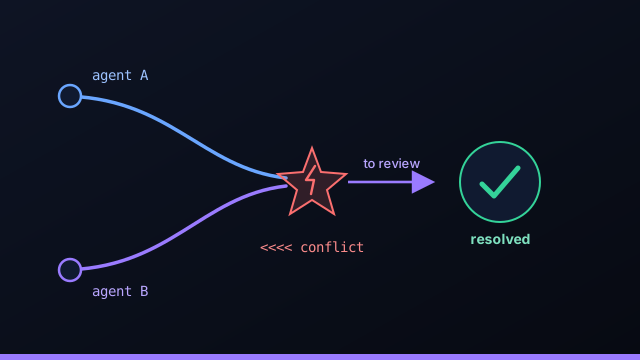
When a genuine conflict does happen, the rule is simple: never force it. A conflicting branch routes to your review queue, where you resolve it or re-dispatch the task against the updated base. Main only ever absorbs clean, reviewed merges — automation never gambles on a messy one.
Small tasks, fewer conflicts
The cheapest prevention is scope. Small tasks touch fewer files and live for less time, so they overlap with other work far less often. Keeping tasks tight isn't just good for review — it's one of the most effective conflict-avoidance tactics there is.
Parallel agents don't have to mean merge hell. Isolate the work, order the merges, keep tasks small — and conflicts become rare and contained.
Anatomy of an agent merge conflict
A merge conflict happens when two branches change the same lines of the same file and git can't decide which version wins. With AI coding agents running in parallel, the setup is common: agent A and agent B both branch off main, both edit src/auth.ts, and whichever merges second hits the conflict. The danger isn't the conflict itself — git is just asking a question — it's letting automation guess the answer. A forced or careless auto-merge can silently drop one agent's work or stitch the two together incorrectly. The right mental model is that the only place two agents' changes should ever meet is at merge time, on your terms, with isolation keeping them apart everywhere else. Understanding that anatomy is what makes conflicts manageable rather than scary.
Resolving a conflict the right way
When a genuine conflict occurs, the rule is: never force it. The conflicting branch should route to your review queue, where you have two clean options. You can resolve it manually — read both sides, keep the right combination, and merge with intent. Or, often better, you can re-dispatch the task against the updated base: now that the other change has landed, an agent redoes the work on top of integrated code, usually producing a clean result with no conflict at all. Either way, main only ever absorbs a reviewed, intentional merge — automation never gambles on a messy one. That single discipline, routing conflicts to a human instead of force-merging, is what keeps parallel AI development from corrupting your history.
A merge-conflict prevention checklist
Most conflicts are prevented before they happen. Run through this: isolate every task in its own git worktree and branch so agents never collide while working; merge in dependency order so each task builds on the latest integrated code rather than a stale snapshot, which removes the overlaps that would have conflicted; scope tasks small so they touch fewer files and live for less time, dramatically lowering the odds of two tasks hitting the same lines; and route any real conflict to review rather than forcing it. Notice these are the same practices that make parallel agents safe in general — isolation, ordering, small tasks, a review gate. Command Fleet applies all four automatically, which is why "won't five agents create merge hell?" turns out to be a solved problem rather than a dealbreaker.
Key takeaways on parallel-agent merge conflicts
- Conflicts aren't a tax on parallelism — they're a symptom of letting parallel work integrate carelessly.
- Isolation contains the conflict — a worktree per task means changes only ever meet at merge time, on your terms.
- Merge order prevents most of them — integrating in dependency order removes the overlaps that would have clashed.
- Never force a conflict — route it to review and resolve it, or re-dispatch the task against the updated base.
- Small tasks conflict less — fewer files touched, shorter branch lifetimes, less overlap.
Those are the same practices that make running many AI coding agents safe in general — isolation, ordering, small tasks, and a review gate. Apply all four (Command Fleet does, automatically) and "won't five agents create merge hell?" turns out to be a solved problem rather than a reason not to parallelize.
Frequently asked questions
How do I avoid merge conflicts with parallel AI agents?
Design them out: isolate each task in its own worktree and branch, merge finished branches in dependency order so each builds on integrated work, scope tasks small so they touch fewer files, and route any real conflict to review instead of forcing it.
Why do parallel agents cause merge conflicts?
Conflicts happen when two branches change the same lines and both try to merge. With several agents editing a shared codebase at once, the odds rise — unless isolation and merge order are managing how their work comes back together.
What happens when an agent's branch conflicts?
A conflicting branch should route to your review queue rather than being force-merged. You resolve it (or re-dispatch the task against the updated base) so main never absorbs a bad automatic merge.
Do smaller tasks reduce merge conflicts?
Yes. Small, focused tasks touch fewer files and live for less time, so they overlap with other work less often. Scoping tasks small is one of the simplest ways to keep conflicts rare.
Parallel without the merge hell
Command Fleet isolates every task, merges in dependency order, and routes conflicts to review. Free for 7 days, no credit card.